';
div.innerHTML = summary;
}// Fin des scripts, à ne pas supprimer (voir) getBody
Qui sommes nous ?
Le 25 mai 2018, alors que se tenait à Paris un énième sommet néolibéral lié au processus de Bologne, La France Insoumise a organisé à l’Assemblée nationale une journée de débats intitulée « Pour une université européenne insoumise ».
À la suite de cette journée, à laquelle ont contribué de nombreux chercheurs, universitaires, étudiants, militants associatifs, syndicaux et politiques venant de tous horizons et de différents pays (Allemagne, Argentine, Colombie, Espagne, France, Grèce, Italie, Royaume-Uni, Suède…), il a été décidé par l’ensemble des participants de lancer un appel à la création d’un réseau alternatif mondial de l’Enseignement Supérieur et de la Recherche (ESR).
Ce réseau, désormais constitué, réunit à ce jour 340 signatures, individuelles et collectives, représentant 35 pays, et a pris pour nom « L’Internationale des Savoirs pour Tous ». Vous pouvez en devenir membre en signant le texte de notre appel fondateur, « La science pour le plus grand nombre, pas pour l’argent », disponible en plusieurs langues (français, anglais, allemand, espagnol, italien, portugais).
L’Internationale des Savoirs pour Tous poursuit trois objectifs principaux : 1) critiquer, dans chaque pays et partout, les orientations, le contenu et la mise en œuvre des politiques néolibérales ; 2) fédérer et dynamiser les luttes, locales, nationales et internationales en cours ou à venir ; 3) démontrer que des propositions et programmes alternatifs au « tout-marché » de l’ESR sont d’ores et déjà prêts ou en voie d’élaboration.
N’hésitez pas à participer à ces différents objectifs en nous envoyant vos contributions, écrites ou filmées, aux adresses électroniques indiquées dans la page contacts. Pour faciliter le travail de chacun et faire vivre notre internationale dans sa diversité, ces contributions seront publiées dans leurs langues d’origine.
L’Enseignement Supérieur et la Recherche, la société, le monde d’après les marchands sont à notre portée. Ils s’inventent déjà, dans nos résistances, nos créations, nos visions de l’avenir. Il ne tient qu’à vous d’y prendre part.
On 25 May 2018, while yet another neoliberal summit linked to the Bologna Process was being held in Paris, « France insoumise » organised a day of debates entitled « For a rebellious European university » at the National Assembly.
Following this day, to which many researchers, academics, students, association, trade union and political activists from all horizons and from different countries (Argentina, Colombia, France, Germany, Greece, Italy, Spain, Sweden, United Kingdom...) contributed, it was decided by all participants to launch a call for the creation of an alternative global Higher Education and Research (HER) network.
This network, which has now been set up, currently gathers 340 signatures, both individual and collective, representing 35 countries, and has taken the name "The International of Knowledge for All". You can become a member by signing the text of our founding call, "Science for the many, not for money", available in several languages (French, English, German, Italian, Portuguese, Spanish).
The International of Knowledge for All has three main objectives: 1) to criticise, in each country and everywhere, the orientations, content and implementation of neoliberal policies; 2) to federate and energise the local, national and international struggles in progress or to come; 3) to demonstrate that alternative proposals and programs to the "all-market" of HER are already ready or under development.
Feel free to participate in these different objectives by sending us your contributions, written or filmed, to the e-mails indicated in the contacts page. To facilitate the work of everyone and to keep our international community alive in its diversity, these contributions will be published in their original languages.
Higher Education and Research, society, the world after the merchants are within our reach. They are being invented already, in our resistances, our creations, our visions of the future. It is up to you to be part of it.
Am 25. Mai fand in Paris ein neues neoliberales Gipfeltreffen zum Bologna-Prozess statt. Am selben Tag unterstüzte die Parlamentsfraktion « Das Aufstehende Frankreich » eine eintägige internationalistische Arbeitssitzung mit dem Namen « Europas Hochschulen stehen auf ».
Teilgenommen hatten zahlreiche ForscherInnen, HochschullehrerInnen, StudentInnen, AktivistInnen und Gewerschaftsmitglieder aus mehreren Traditionen und Ländern (Deutschland, Argentinien, Kolombien, Spanien, Frankreich, Griechenland, Italien, Großbritannien, Schweden…). Anschließend wurde von allen TeilnehmerInnen beschlossen, einen Aufruf für die Bildung eines alternativen Netzwerks für Hochschulen und Wissenschaft zu entwerfen.
Anfang 2019 bestand dieses Netzwerk aus 340 UnterzeichnerInnen aus 35 Ländern, und firmiert unter dem Namen Internationales Netzwerk « Wissen für Alle ». Auch Sie können uns unterstützen, indem Sie den Aufruf unterzeichnen : « Wissenschaft für die Vielen statt Wissenschaft für Profit ».
Das Internationale Netzwerk Wissen für Alle verfolgt drei Hauptziele : 1) Die weltweite Kritik an der Neoliberalisierung von Hochschulen und Wissenschaft 2) Die Förderung und Annäherung der lokalen, nationalen und internationalen Kämpfe gegen diese Neoliberalisierung 3) Die Illustration bestehender Alternativvorschläge auf diese marktkonforme Wissenschaftspolitik.
Sie Können diese drei Hauptziele fördern, indem Sie schriftliche oder filmische Beiträge zu den jeweiligen Kontaktadressen schicken (siehe Kontaktseite). Um die Arbeit aller Mitarbeiter zu erleichtern und die Vielfalt des internationalen Netzwerks zu unterstreichen, werden die Beiträge jeweils in der Originalsprache veröffentlicht.
Die Gesellschaft, die Welt, die Hochschule und die Wissenschaft nach dem Zeitalter des Marktes befinden sich schon im Entstehen. Sie entstehen durch unseren Widerstand, unsere Initiativen, unsere Zukunftsprojekte. Es kommt nur auf Sie an, dazu Ihren Beitrag zu liefern.
El 25 de mayo de 2018, mientras se celebraba en París otra cumbre neoliberal relacionada con el proceso de Bolonia, « France insoumise » organizó un día de debates en la Asamblea Nacional titulado « Por una universidad europea insubordinada ».
Después de este día, a la que contribuyeron muchos investigadores, académicos, estudiantes, activistas asociativos, sindicales y políticos provenientes de todos los horizontes y de diferentes países (Alemania, Argentina, Colombia, España, Francia, Grecia, Italia, Reino Unido, Suecia...), todos los participantes decidieron lanzar una convocatoria para la creación de una red mundial alternativa de Educación Superior e Investigación (ESI).
Esta red, que ya ha sido creada, reúne actualmente 340 firmas, tanto individuales como colectivas, que representan 35 países, y ha tomado el nombre de « La Internacional del Saber para Todos ». Usted puede hacerse socio firmando el texto de nuestro llamamiento fundador, « Ciencia para todos, no por dinero », disponible en varios idiomas (francés, inglés, alemán, español, italiano, portugués).
La Internacional del Saber para Todos tiene tres objetivos principales : 1) criticar, en cada país y en todas partes, las orientaciones, el contenido y la aplicación de las políticas neoliberales ; 2) federar y dinamizar las luchas locales, nacionales e internacionales actuales o futuras ; 3) demostrar que las propuestas y los programas alternativos al « todo mercado » de la ESI ya están listos o en desarrollo.
Siéntase libre de participar en estos diferentes objetivos enviándonos sus contribuciones, escritas o filmadas, a los correos electrónicos indicados en la página de contactos. Para facilitar el trabajo de todos y mantener viva la diversidad de nuestra internacional, estas contribuciones se publicarán en sus idiomas originales.
La Educación Superior y la Investigación, la sociedad, el mundo después de los comerciantes están a nuestro alcance. Ya se están inventando, en nuestras resistencias, en nuestras creaciones, en nuestras visiones del futuro. Depende de ustedes ser parte de ellas.
Il 25 maggio 2018, in occasione dell’ennesimo vertice neoliberale legato al processo di Bologna a Parigi, «La France Insoumise» ha organizzato una giornata di dibattiti dal titolo «Per un’università europea insubordinata» all’Assemblea nazionale.
In seguito a questa giornata, alla quale hanno contribuito numerosi ricercatori, accademici, studenti, militanti sindacali, politici o del mondo associativo di ogni estrazione sociale e di diversi paesi (Argentina, Colombia, Francia, Germania, Grecia, Italia, Spagna, Svezia, Regno Unito...), è stato deciso da tutti i partecipanti di lanciare un appello per la creazione di una rete globale alternativa di Insegnamento Superiore e di Ricerca (ISR).
Questa rete è stata creata e raccoglie attualmente 340 firme, individuali e collettive, in rappresentanza 35 paesi, e ha preso il nome di «L’Internazionale della Conoscenza per Tutti». Puoi diventare membro firmando il testo del nostro appello fondativo, «La scienza per i molti, e non per i soldi», disponibile in diverse lingue (francese, inglese, italiano, portoghese, spagnolo, tedesco).
L’Internazionale della Conoscenza per Tutti ha tre obiettivi principali: 1) criticare, ovunque e in ogni paese, gli orientamenti, i contenuti e l'attuazione delle politiche neoliberali; 2) federare e animare le lotte, locali, nazionali e internazionali in corso o a venire; 3) dimostrare che proposte e programmi alternativi al sistema di ISR centrato sul mercato sono già pronti o in fase di sviluppo.
Sentitevi liberi di contribuire a questi diversi obiettivi inviandoci i vostri contributi, scritti o filmati, agli indirizzi e-mail indicati nella pagina dei contatti. Per facilitare il lavoro di tutti e mantenere viva la nostra rete internazionale nella sua diversità, questi contributi saranno pubblicati in lingua originale.
L’Insegnamento Superiore e la Ricerca, la società, il mondo al di là del mercato sono alla nostra portata. Li stiamo già inventando, nella nostra resistenza, nelle nostre creazioni, nelle nostre visioni del futuro. Sta a voi farne parte.
Em 25 de maio de 2018, enquanto outra cúpula neoliberal relacionada ao processo de Bolonha estava sendo realizada em Paris, « France insoumise » organizou um dia de debates na Assembléia Nacional intitulado « Por uma universidade europeia insubordinada ».
Após esse dia, para o qual contribuiram muitos pesquisadores, acadêmicos, estudantes, sindicalistas e ativistas políticos provenientes de todos os horizontes e de diferentes países (Alemanha, Argentina, Colômbia, Espanha, França, Grécia, Itália, Reino Unido, Suécia...), foi decidido por todos os participantes lançar um chamamento à criação de uma rede alternativa global de Ensino Superior e Pesquisa (ESP).
Esta rede, agora criada, reúne actualmente 340 assinaturas, individuais e colectivas, representando 35 países, e recebeu o nome de « Internacional do Saber para Todos ». Pode tornar-se membro assinando o texto do nosso chamamento fundador, « Ciência para todos, não para o dinheiro », disponível em várias línguas (francês, inglês, alemão, espanhol, italiano, português).
Internacional do Saber para Todos tem três objetivos principais : 1) criticar, em cada país e em todos os lugares, as orientações, o conteúdo e a implementação das políticas neoliberais ; 2) federar e energizar as lutas locais, nacionais e internacionais em curso ou futuras ; 3) demonstrar que as propostas e programas alternativos de ESP ao « todo para o mercado » já estão prontos ou em desenvolvimento.
Sinta-se à vontade para participar nestes diferentes objectivos, enviando-nos as suas contribuições, escritas ou filmadas, para os e-mails indicados na página de contactos. Para facilitar o trabalho de todos e manter viva a nossa comunidade internacional na sua diversidade, essas contribuições serão publicadas nas suas línguas originais.
O Ensino Superior e a Pesquisa, a sociedade, o mundo para além dos comerciantes estão ao nosso alcance. Eles já estão sendo inventados, em nossas resistências, em nossas criações, em nossas visões de futuro. Cabe a você fazer parte delas.
Centro Indígena de Capacitación Integral (CIDECI-UniTierra Chiapas)
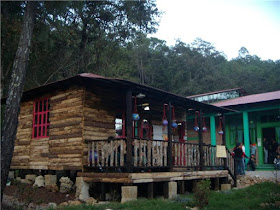
La idea generalizada que tenemos de la Universidad es la de un lugar en el que estudiar durante un tiempo y acabar consiguiendo un título que certifica el supuesto aprendizaje obtenido. La continua mercantilización de la enseñanza promovida por el sistema capitalista también nos lleva a pensar en la Universidad como un lugar excesivamente caro, al que solo algunos tienen la posibilidad de ingresar y en el que, finalmente, recibes un título que ya no te sirve para trabajar (y que, a veces, tampoco refleja los conocimientos adquiridos). Si pensamos en alguna facultad concreta acabamos pensando en un edificio grande, de hormigón gris, quizás adornado con un césped y formado por las últimas tecnologías (en lo que sea). A veces también pensamos en facultades que se caen a pedazos y aulas masificadas. Esto es exactamente lo que no quería el Doctor Raymundo Sánchez Barraza. El Centro Indígena de Capacitación Integral – Universidad de la Tierra (CIDECI-UniTierra) se plantea como todo lo contrario a esa concepción capitalista del aprendizaje que tan asumida tenemos. Por eso es imposible acercarse al proyecto (hoy realidad tangible) sin que se derrumben los esquemas aprehendidos. No se concibe entender el Sistema Indígena Intercultural de Aprendizaje sin la destrucción de lo establecido. Este proyecto comienza a andar en 1983, sin embargo, no es hasta 1989 que se define como autónomo. En ese año es auspiciado por el obispo de San Cristóbal de las Casas, Samuel Ruiz, conocido por su labor indigenista y de apoyo a los pueblos originarios del Estado de Chiapas. Y por ser obispo de la ciudad durante más de 40 años (hasta que el poder consiguió alejarlo de allí para que dejara de provocar fallas en el sistema). Coordinado en todo momento por Raymundo Sánchez Barraza, quién también regala su vida a la causa indigenista. En 1994 los ideales zapatistas se entroncan con los del CIDECI y no se entiende su filosofía sin ellos. Según su coordinador (quien suelta una carcajada al momento de dirigirnos a él como Rector) la denominación de Universidad es un acto de rebeldía, una respuesta a las burlas del sistema al referirse a ellos y al no considerar la capacitación que allí se recibe como un aprendizaje real. Y es que UniTierra ni es oficial ni busca el reconocimiento oficial, sino el de los pueblos y las comunidades indígenas. Indudablemente, ese ya lo tiene. Entonces “¿por qué no podemos tener el prestigio de las universidades?”, se pregunta Raymundo Sánchez.
Estructura y organización
Niños y niñas venidos de comunidades indígenas, a partir de los 12 años y con independencia de que sepan leer o escribir o de que conozcan el idioma castellano. Este es el perfil de los y las alumnas que ingresan al centro. No hay un número fijo de estudiantes en cada momento, ya que si lo normal es que se tomen cursos de (más o menos) 9 meses, jóvenes van y vienen según su disponibilidad. Pueden tomar 15 días de curso, un mes o varios años. Dependiendo de la distancia entre su comunidad y el centro, quienes allí estudian estarán internos o externos. Esto es, quienes vienen de comunidades más lejanas serán internos y harán uso de los albergues con los que cuenta el centro mientras que quienes residan en comunidades circundantes estarán externos, yendo y viniendo a sus cursos a diario. Así como el número de alumnos es variable en cada momento, lo que si se mantiene es la proporción de hombres y mujeres. Sobresalen los chicos sobre las chicas. En número, claro. También son constantes los y las estudiantes que desconocen el castellano al llegar a sus cursos. Las lenguas que predominan son el tzotsil, el tzeltal y el ch’ol; aunque son muchas más las que se cruzan en los talleres del CIDECI. Los profesores conocen esas lenguas, aunque no siempre hablan a los y las alumnas en su lengua materna, “porque si no nunca aprendemos” como dice uno de los chicos que allí desarrolla su actividad.
Los saberes que se imparten van desde cursos de tortillería y panadería (con los que se abastece el comedor en el que colaboran los y las estudiantes) hasta cursos de herrería, electricidad, carpintería y alfarería. Es gracias a la aplicación de estos aprendizajes que el centro es lo que es hoy en día, ya que ha sido totalmente construido por quienes allí estudian. Igual que la mantención del mismo. Un ejemplo, las cortinas se hacen en el taller de telares, y luego se cosen y preparan para su uso en el taller de corte y confección y luego, en el caso de que queramos que las cortinas lleven algún motivo dibujado este se hará en el taller de pintura. Así cualquier cosa que veamos en el vasto terreno del CIDECI habrá sido construida gracias a los saberes que allí se han transmitido. Todo esto sin dejar a un lado la música, mecanografía o computación, donde además se practica el arte de arreglar con las manos todos los instrumentos necesarios para estas actividades. Junto con estos saberes hay unas cuantas áreas de estudios como son: Derecho Autónomo, Arquitectura Vernácula, Agroecología, Hidrotopografía, Administración de Iniciativas y Proyectos comunitarios, Interculturalidad o Análisis de los Sistemas – Mundo. Al terminar su estancia en la UniTierra, los y las alumnas reciben apoyo en un proyecto para aplicar sus conocimientos en la comunidad de la que provienen. Así se les surte de conocimientos, asistencia y las herramientas necesarias para echar a andar sus ideas en sus comunidades. Unas ideas que luego repercutirán en sus compañeros más cercanos facilitándole o mejorándole sus vidas en comunidad ¿Cómo no considerarla Universidad, cuando quizás sea la más digna de todas?
Instalaciones y autonomía
La autonomía se respira en el aire de la Universidad de la Tierra. En el taller de zapatería se hacen los zapatos para los y las alumnas, el huerto ofrece las verduras que se cocinarán en el comedor, pero también las que sirven de alimento a los animales de la granja (conejos, borregos, ocas, cerdos, gallinas y pavos). Trabajar en el mantenimiento de estas instalaciones es la reciprocidad que ofrecen quienes allí estudian a cambio de la gratuidad lugar. Y a su vez, todo lo producido sirve para abastecer a las personas que allí residen. ¿Y la luz y el agua? Evidentemente, no vienen por parte del gobierno o de alguna institución oficial ya que lo único que se ha recibido por parte de estos ha sido un cruel hostigamiento. La CFE (Comisión Federal de Electricidad) ha merodeado por la zona de manera amenazante en busca de pagos. Eso se supera gracias a la instalación de generadores de electricidad. El agua que abastece a todos y que corre por el sistema de riego que hay instalado proviene de un profundo pozo cavado en sus terrenos. Autonomía total.
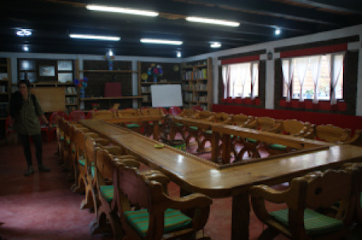
Cada jueves los y las estudiantes se reúnen aquí para tratar temas de actualidad, movimientos sociales o problemas que se planteen en sus comunidades.
Lejos de tener carencias, la Universidad de la Tierra se muestra como un paraíso. Las instalaciones y su integración en la naturaleza distan mucho de lo que podemos pensar de esta universidad sin zapatos, como se autodenomina. Además de las decenas de talleres (entendidos como lugar físico), del comedor y de las construcciones que guardan los generadores; son varias las salas para seminarios y aulas que se prestan a otros movimientos sociales. Una colorida capilla se presta a la realización del culto y un enorme auditorio se abre a grandes celebraciones y tiene siempre las puertas abiertas al EZLN, quien celebró en dicho auditorio la Clausura del Primer Festival de las Resistencias y las Rebeldías Contra el Capitalismo este pasado mes de enero.
Filosofía e inspiración
Además de inspirarse en el EZLN y el obispo Samuel Ruiz, este centro por y para indígenas se asienta sobre los principios de Imanuel Wallerstein y de Iván Illich. Del primero agarran su análisis sobre el capitalismo basado en conceptos como Sistema – Mundo. Es de Iván Illich de quien beben sus concepciones acerca de la enseñanza, el aprendizaje y la desescolarización. Se olvidan del tipo de enseñanza impuesto por el capitalismo al que hacíamos referencia al comienzo de este texto y priman el aprendizaje en relación con las personas. Cómo diría Illich en La sociedad desescolarizada:
Los profesores de habilidades se hacen escasos por la creencia en el valor de los títulos. La certificación es una manera de manipular el mercado y es concebible sólo para una mente escolarizada. La mayoría de los profesores de artes y oficios son menos diestros, tiene menor inventiva y son menos comunicativos que los mejores artesanos y maestros.
La instrucción libre y rutinaria es una blasfemia subversiva para el educador ortodoxo. Ella desliga la adquisición de destrezas de la educación ‘humana’, que la escuela empaca conjuntamente, y fomenta así el aprendizaje sin título o permiso no menos que la enseñanza sin título para fines imprevisibles.
Dos citas muy prácticas para entender la filosofía del CIDECI que se basa en tres principios inquebrantables: “aprender haciendo”, “aprender a aprender” y “aprender a ser más”. Estos principios ejercen de guía principal a la vez que sirven de bola de demolición contra lo ya impuesto en materia de educación por el sistema actual. Una red entretejida por y para los indígenas de la mano del “Doc” Raymundo. “Seguir haciendo, seguir formando sin perder de vista las directrices del EZLN y de los pueblos originarios”. Porque la Universidad de la Tierra es por y para ellos.
Membre de l’Internationale des Savoirs pour Tous, Alexandre Hippert a créé une conférence gesticulée sur les rapports entre marchandisation du savoir et sacralisation de la science. On en trouvera ci-dessous le texte de présentation et la vidéo déjà en ligne via l’Université populaire du pays viennois, située dans le département de l’Isère. Un grand merci à lui pour cette conférence tout à fait en écho avec la critique et les idéaux de notre Internationale. Il sera d’ailleurs présent à Marseille, lors de notre congrès des 22 et 23 novembre prochains.
La Rédaction du blog
À travers une conférence gesticulée intitulée Paie ta science !, Alexandre Hippert, doctorant en laboratoire de traitement de l’information, propose d’explorer notre rapport au progrès et à la connaissance scientifique. En puisant dans sa jeune expérience de l’enseignement supérieur et la recherche, naviguant entre découvertes scientifiques révolutionnaires, émancipation politique et anecdotes amoureuses, Alexandre nous invite à la réflexion sur la place du chercheur et du citoyen dans notre société. Une des idées est de déconstruire le « mythe » du savant et la perception du progrès scientifique dans l’imaginaire collectif et de dénoncer son instrumentalisation par l’industriel et le politique. Comment se fait-il qu’un pan entier de la connaissance financé par des fonds publics soit aujourd’hui marchandisé par certains acteurs de l’édition scientifique ? Par quels moyens ? À travers son parcours et ses déceptions successives, Alexandre nous propose d’imaginer une société où le savoir circulerait librement et ouvertement, où le citoyen serait l’acteur des décisions concernant l’utilité publique des innovations techno-scientifiques, une société où la barrière entre savant et citoyen n’existerait plus.
Ce qui vient de frapper l’humanité avec la pandémie de Covid-19 a largement excédé les facultés de jugement de la plupart d’entre nous face à la fragilité et la vulnérabilité du monde que nous avons fabriqué. L’agitation de nos contemporains, englués dans une vie nourrie d’« infos », de « tweets », et de « fausses nouvelles » a crû à proportion de la sidération qui s’est emparée d’eux depuis le début de la pandémie. Jusque-là en effet, une majorité de l’humanité anesthésiée par son adhésion au consumérisme ou, au contraire, par son enfermement dans la survie et l’humiliation, avait tout encaissé sans presque broncher : la « crise de la vache folle », la catastrophe de Tchernobyl puis celle de Fukushima, l’épidémie du SIDA, le SRAS, le virus Ebola, la « crise financière » de 2008-2009, le changement climatique et l’érosion de la biodiversité, etc. Or toutes ces manifestations, qu’on les appelle « crises », « accidents », « catastrophes », relèvent en réalité du fonctionnement « normal » de la société du risque dans laquelle les investisseurs, les ingénieurs, les technocrates et les assureurs ont décidé de nous faire vivre. Mais pour tous ces spécialistes et autres experts, le bilan des paris épidémiques qu’ils ont engagés dans la dernière moitié du XXe siècle est indéniablement positif : selon eux en effet, l’espérance de vie n’a pas cessé d’augmenter, la pauvreté de régresser, la santé de s’améliorer, etc.
Signe, malgré tout, de ce que certains n’avaient pas renoncé à toute forme de dignité, la révolte des « gilets jaunes » contre leur précarisation, puis les grandes grèves contre le démantèlement du service public et la réforme des retraites, étaient parvenues à jeter des centaines de milliers de personnes dans les rues pendant des mois et des mois. Et c’est loin d’être fini ! Car toutes ces catastrophes et épidémies se déploient, ainsi que l’avait écrit Svetlana Alexievitch à propos de Tchernobyl, comme des arbres qui poussent dans la forêt des désastres qui ravagent la Terre aujourd’hui. La Terre, en effet, à laquelle l’humanité sera rivée pour longtemps encore, et non la planète, considérée par les partisans de la conquête et de l’illimitation comme un laboratoire à ciel ouvert pour les expérimentations les plus folles.
Jusqu’au milieu des années 1980, des alternatives à la poursuite mortifère du productivisme étaient encore envisageables. Au lieu de quoi, sous couvert de la recherche d’une « troisième voie » entre capitalisme et communisme, « gauche » et « droite » de « gouvernement » ont continué à célébrer les vertus indépassables du marché, de la concurrence non faussée, de la dérégulation et de l’innovation. Jusqu’à aboutir, après la première tentative d’Emmanuel Macron, au dernier avatar du « ni droite ni gauche » que, parmi d’autres et non sans cynisme, tentent d’incarner aujourd’hui le mouvement « Le jour d’après » ou les inquiétants appels à un gouvernement d’union nationale. Car c’est bien sous ces habits-là que le néolibéralisme et, plus encore, le capitalisme numérique allié à la finance et à la technocratie se sont subrepticement emparés de la vie sociale en la dissolvant dans un lacis de dispositifs. La notion de risque, le calcul des probabilités et les évaluations en termes de coût/avantage ont, en la matière, joué un rôle déterminant dans la volonté de substituer une gouvernance par les experts à la vieille politique et à l’ancien monde.
À partir du milieu des années 1980, il devint de plus en plus difficile d’aller à contre-courant de l’optimisme technologique et économique qui avait contaminé la grande majorité des politiques et des experts. Et il faut donc rappeler que cette euphorie fut, sous la qualification de « mondialisation heureuse », le principal moteur de la catastrophe à venir : « Le néolibéralisme, qui veut faire de la concurrence l’alpha et l’oméga de l’organisation sociale, se voit conduit à l’imposer d’en haut, disciplinairement, et aboutit à un hybride cumulant les défauts du marché et de la bureaucratie. C’est en ce sens qu’il est permis de parler pour la France d’un néolibéralisme d’essence dirigiste1 ». On pourrait aussi bien parler à ce propos d’un mariage entre la carpe et le lapin, ou d’une chimère, dont la viabilité ne saurait durer éternellement. Qui, ainsi, aurait pu prévoir qu’un redoutable virus venu de Chine pourrait, malgré le déni de certains, lui porter un coup potentiellement fatal ? Potentiellement, en effet, car pour le moment en tous cas, l’impuissance des médecins et l’incapacité des experts et des politiques à enrayer la pandémie et les conséquences qui vont en découler a, en France en particulier, suscité autocritiques et repentir du gouvernement et même du chef de l’État. De leur côté, les candides et les incorrigibles optimistes semblent s’attendre à ce qu’advienne enfin le règne du « plus jamais ça ! ».
Ce qui, depuis longtemps, s’était déployé comme une sorte de processus a en réalité résulté de l’extension du calcul en termes de bénéfices/risques à toutes les institutions et activités humaines : la santé, l’enseignement, les assurances et, plus généralement toutes les politiques publiques. Au risque qu’apparaisse, à l’occasion d’une nouvelle crise, un effondrement de la confiance qu’accordaient les acteurs sociaux à ce qui s’apparente en réalité à un nouveau type de gouvernement qu’on appelle aujourd’hui gouvernance. C’est dans les années 1980 à 2000 que se sont déployées, à partir de la Californie, les stratégies qui ont accompagné la désindustrialisation de la « vieille » Europe, la Chine et l’Inde devenant alors respectivement l’usine et le bureau de la planète. Avec l’avènement de la société du risque, le développement des systèmes experts, des réseaux et des délocalisations a largement détruit les relations concrètes de « face à face » dans des sociétés de plus en plus soumises à la tyrannie de la traçabilité et du sans contact. Durant ces quarante dernières années, le travail de déconstruction et de remodelage de ce qui s’était présenté, au sortir de la seconde guerre mondiale, comme un édifice capable de résister aux excès du marché dérégulé, n’a en effet jamais cessé. Jusqu’à ce que, sous l’emprise d’une pandémie, le pouvoir et la finance semblent redécouvrir les vertus de l’État-Providence et d’un vaste secteur public déjà largement délabrés par le procès de dissolution générale de la société et de contrôle électronique de la vie d’individus atomisés.
Mais, nous ne voulons toujours pas croire ce que nous savons et, en premier lieu, que la superficie du monde habitable ne cesse de rétrécir pour une population qui, elle, ne cesse d’augmenter et dont les conditions de vie, pour une fraction croissante d’entre elle, vont continuer à se dégrader. Si rien ne change, et rien sur le fond n’indique que cela pourrait changer, sauf à empirer, ce n’est plus dans l’incertitude que nous allons devoir vivre, mais dans l’imprévisibilité totale. Le moment semble pourtant vraiment venu, cette fois-ci, de se poser quelques questions fondamentales.
La pandémie de coronavirus a engendré de multiples dégâts dans le domaine de l’enseignement supérieur et révélé l’importance des liens incestueux unissant la recherche « scientifique » aux investisseurs et à l’industrie pharmaceutique. Ainsi, l’offensive déjà largement engagée contre les Cours Magistraux (CM) et les Travaux Dirigés (TD) dispensés en « présentiel » (sic) va-t-elle se poursuivre et s’intensifier dès la prochaine rentrée universitaire avec son cortège de suppressions de postes et de précarisation accrue des personnels. De la même manière, au nom du désir de reconnaissance et de la soumission au terrible diktat « publier ou périr ! », les études biaisées (comme celle parue récemment dans The Lancet) vont continuer à proliférer. Les technologies numériques qui constituent le support et les moteurs de cette destruction massive sont-elles, comme se l’est demandé le groupe Pièces et Main d’œuvre de Grenoble, vraiment nécessaires ? Pourquoi celles-ci plutôt que d’autres ? Quels problèmes sont-elles censées résoudre ? À qui profitent-elles ? En quoi modifient-elles nos vies, nos rapports sociaux, notre condition humaine, notre environnement – et ces changements sont-ils ceux que l’on souhaite ? Quelles sont nos priorités collectives ? Quelles valeurs voulons-nous défendre ? Bref, des questions politiques, philosophiques et morales si l’on veut. Que chacun, membre de la Cité, peut et doit se poser ; qu’il maîtrise les sciences de l’atome ou qu’il ne sache pas lire.
1 Jean-Paul Malrieu, La science gouvernée. Essai sur le triangle sciences/techniques/pouvoir, Librairie Ombres blanches, collection « Rue des Gestes », 2011, p. 86-87.